


Showing posts with label Management Books. Show all posts
Showing posts with label Management Books. Show all posts
Thursday, April 25, 2013

Tuesday, November 1, 2011


Thursday, July 28, 2011

Tuesday, March 15, 2011


Sunday, March 13, 2011
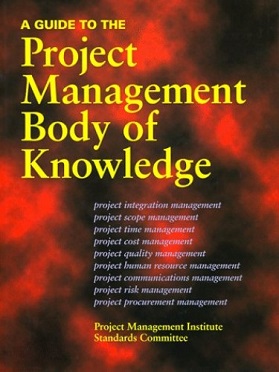
Book: Project Management Guide Book
“Project Management is the skills, tools and management processes required to undertake a project successfully”. Project Management comprises:
▪ A set of skills. Specialist knowledge, skills and experience are required to reduce the level of risk within a project and thereby enhance its likelihood of success
▪ A suite of tools. Various types of tools are used by project managers to improve their chances of success. Examples include document templates, registers, planning software, modeling software, audit checklists and review forms
▪ A series of processes. Various management techniques and processes are required to monitor and control time, cost, quality and scope on projects. Examples include time management, cost management, quality management, change management, risk management and issue management.
▪ A suite of tools. Various types of tools are used by project managers to improve their chances of success. Examples include document templates, registers, planning software, modeling software, audit checklists and review forms
▪ A series of processes. Various management techniques and processes are required to monitor and control time, cost, quality and scope on projects. Examples include time management, cost management, quality management, change management, risk management and issue management.
Book: Project Management Guide Book (Download)
Book: Project Management

Projects have been around since ancient times. Noah building the ark, Leonardo da Vinci painting the Mona Lisa, Edward Gibbon writing The Decline and Fall of the Roman Empire, Jonas Salk developing the polio vaccine — all projects. And, as you know, these have been masterful successes. (Well, the products were a spectacular success, even if schedules and resource budgets were drastically overrun!)
Book: Project Management (Download)
Monday, March 7, 2011
Book: Financial Management (ACCA F9)

Having studied this chapter you will be able to:
• Explain the nature & purpose of financial management, and its relationship to financial and management accounting.
• Discuss the relationship between financial objectives (eg shareholder wealth maximisation, profit maximisation, earnings per share growth), corporate objectives and corporate strategy.
• Identify the range of stakeholders, their objectives and possible conflict between stakeholder objectives.
• Discuss the role of management in meeting stakeholder objectives including the use of agency theory.
• Describe and apply ways of measuring achievement of corporate objectives.
• Explain ways to encourage the achievement of stakeholder objectives, including managerial reward schemes and regulatory requirements.
• Discuss the impact of not-for-profit status on financial and other objectives.
• Discuss the nature and importance of Value for Money as an objective and how to measure the achievement of objectives in not-for-profit organisations.
Sponser: Adeel from ICMAP
Book: Financial Management (ACCA F9) Download Friday, March 4, 2011
Book: Marketing Management by Kotler
What are the tasks of marketing?
■ What are the major concepts and tools of marketing?
■ What orientations do companies exhibit in the marketplace?
■ How are companies and marketers responding to the new challenges?
■ What are the major concepts and tools of marketing?
■ What orientations do companies exhibit in the marketplace?
■ How are companies and marketers responding to the new challenges?
Change is occurring at an accelerating rate; today is not like yesterday, and tomorrow will be different from today. Continuing today’s strategy is risky; so is turning to a new strategy. Therefore, tomorrow’s successful companies will have to heed three certainties:
➤ Global forces will continue to affect everyone’s business and personal life.
➤ Technology will continue to advance and amaze us.
➤ There will be a continuing push toward deregulation of the economic sector.
➤ Global forces will continue to affect everyone’s business and personal life.
➤ Technology will continue to advance and amaze us.
➤ There will be a continuing push toward deregulation of the economic sector.
Book: Marketing Management (Download)
Thursday, March 3, 2011
Book: Organizational Behavior
 People at work in organizations today are part of a new era. The institutions of society and the people who make them work are challenged in many and very special ways. Society at large increasingly expects high performance and high quality of life to go hand-in-hand, considers ethics and social responsibility core values, respects the vast potential of demographic and cultural diversity among people, and accepts the imprint of a globalization on everyday living and organizational competitiveness. In this new era of work and organizations, the body of knowledge we call “organizational behavior” offers many insights of great value.
 WHAT IS ORGANIZATIONAL BEHAVIOR?
Formally defined, organizational behavior—OB for short—is the study of individuals and groups in organizations. Learning about OB will help you develop a better work-related understanding about yourself and other people. It can also expand your potential for career success in the dynamic, shifting, complex, and challenging new workplaces of today…and tomorrow.
Book: Organizational Behavior Download(Download)
Wednesday, March 2, 2011
Book: Organizational Behavior
 For courses in Organizational Behavior, Human Relations, and Industrial Psychology. By adopting a diagnostic approach, this text encourages students and managers to describe situations completely, diagnose the organizational behavior, prescribe the best practices or most appropriate behavior for given organizational situations, and then act effectively in those situations. Each chapter s introductory scenario describes a real-world situation. End-of-chapter activities and end-of-part cases give students the opportunity to practice their diagnostic and action skills.
Book: Organizational Beahavior (Download)
Thursday, February 24, 2011
Strategic Information System..
 What is the field of study called “Strategic Information Systems” about? Is it about information systems that are strategic? Is it about information systems that support strategy? Is it about how strategy and information systems should be aligned? The answer to these three questions is “yes”. This chapter accepts the above myriad of interpretations of strategic information systems and presents a review of the many varied concepts and issues. A perspective on the interpretation of these terms is that information technology may be used to represent the components of infrastructure, such as hardware and telecommunications. Then, the term information system (which would encompass these infrastructure components) also includes the processes, both manual and automated, which support business operations and eventually, in relation to the organization’s strategic direction, contributes to competitive advantage. However, in this chapter information systems and information technology will be used interchangeably, mainly because their use throughout the literature reviewed here is not entirely consistent. That is, in this discussion they will mean the same thing. In general, information systems (and in this chapter information technology) exist to gather data and transform that data into information to support decision making within an organization. These decisions may be made at various levels within the organization. However, the eventual consequence of management decisions will relate to the overall business strategy. Thus, the information systems must provide support for the strategic direction of the organization. So, whether the information system is strategic or that it supports strategic initiatives it is an important consequence that information systems be aligned with the adopted strategy of the organization.
Book: Strategic Information System (Download)
Wednesday, February 23, 2011
Project Management
This book was designed for anyone thinking of taking the Project Management Professional (PMP®) exam sponsored by the Project Management Institute (PMI®). This certification is growing in popularity and demand in all areas of business. PMI has experienced explosive growth in membership over the last few years, and more and more organizations are recognizing the importance of project management certification.
Book: Project Management (Download)
Monday, February 21, 2011
Fundamental of Management Accounting CIMA- C01
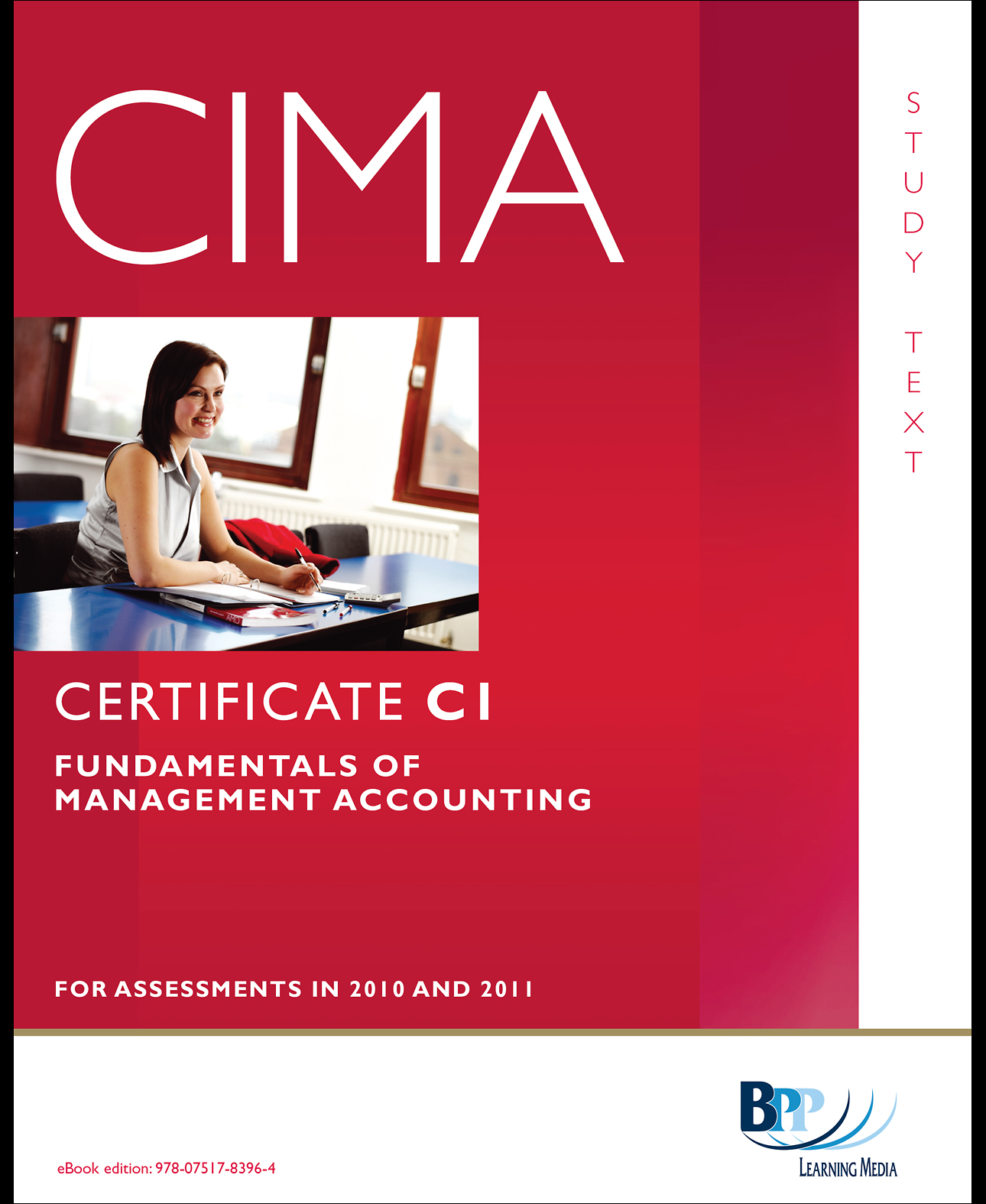 Part A Cost determination and behaviour
1 Introduction to management accounting and costing
2 Cost behaviour
3 Overhead costs – absorption costing
4 Marginal costing and pricing decisions
5 Inventory valuation
6 Breakeven analysis and limiting factor analysis
Part B Standard costing
7 Standard costing
8 Variance analysis
Part C Financial planning and control
9 Budget preparation
10 Flexible budgeting
Part D Costing and accounting systems
11 Cost bookkeeping
12 Process costing
13 Job, batch and contract costing
14 Service costing
Book: Fundamental of Management Accounting- Study Text (Download)
Book: Fundamental of Management Accounting- Practice Book (Download)
Friday, February 18, 2011
Integrated Management
 This book is for CIMA student Integrated Management....
 This Book contains knowledge about:-
Strategic Management
Project Management
Management of Relationship and so on....
Book: Integrated Management (Download)
Wednesday, February 16, 2011
Performance Management

Book: Performance Management (Download)
Tuesday, February 15, 2011
Human Resource Management
This subject/course is designed to teach the basic principles of Human Resource Management (HRM) to diverse audience/students, including those who are studying this as a supporting subject for their bachelor degree program. This course is designed to provide you the foundations of HRM whether you intend to work in HRM or not, most of these elements will affect you at some point in your career. Either you will be working with some organizations or having people working for you, in both cases you will be dealing with people.
To be understandable and lively means that we need to communicate you. We start every chapter with learning objectives. The most important thing you will get out of this course are the basic skills required to succeed in today’s environment which are, you must be able to communicate, think creatively, plan effectively and deal with people.
To be understandable and lively means that we need to communicate you. We start every chapter with learning objectives. The most important thing you will get out of this course are the basic skills required to succeed in today’s environment which are, you must be able to communicate, think creatively, plan effectively and deal with people.
Book: Human Resource Management (Download)
Marketing Management
Marketing, as a discipline, has traveled a long distance in the last four decades. It is a craft of linking the producers of goods and services with the existing and potential customers. The changes in the consumer behavior, market place, channels of distribution, the merchandizing, display and almost anything have been tremendous in the past few decades. The speed of change is stupendous. Major shopping malls, the range of choices, the buying pattern from personal to internet buying, credit cards etc has taken long strides towards difference and has totally changed business outlook. The demand for more sophisticated products has emerged almost in every field. Products have today very close similarities. The research has created nearly the same kind of services and customer aids. Marketers are today faced with tough decisions. One wrong decision or delayed decision can completely put business back and give competitors edge over the market place, which in itself is a tough situation to face.
Book: Marketing Management (Download)


